
Dangers of the Unknown
A Fainting and Epilepsy Story
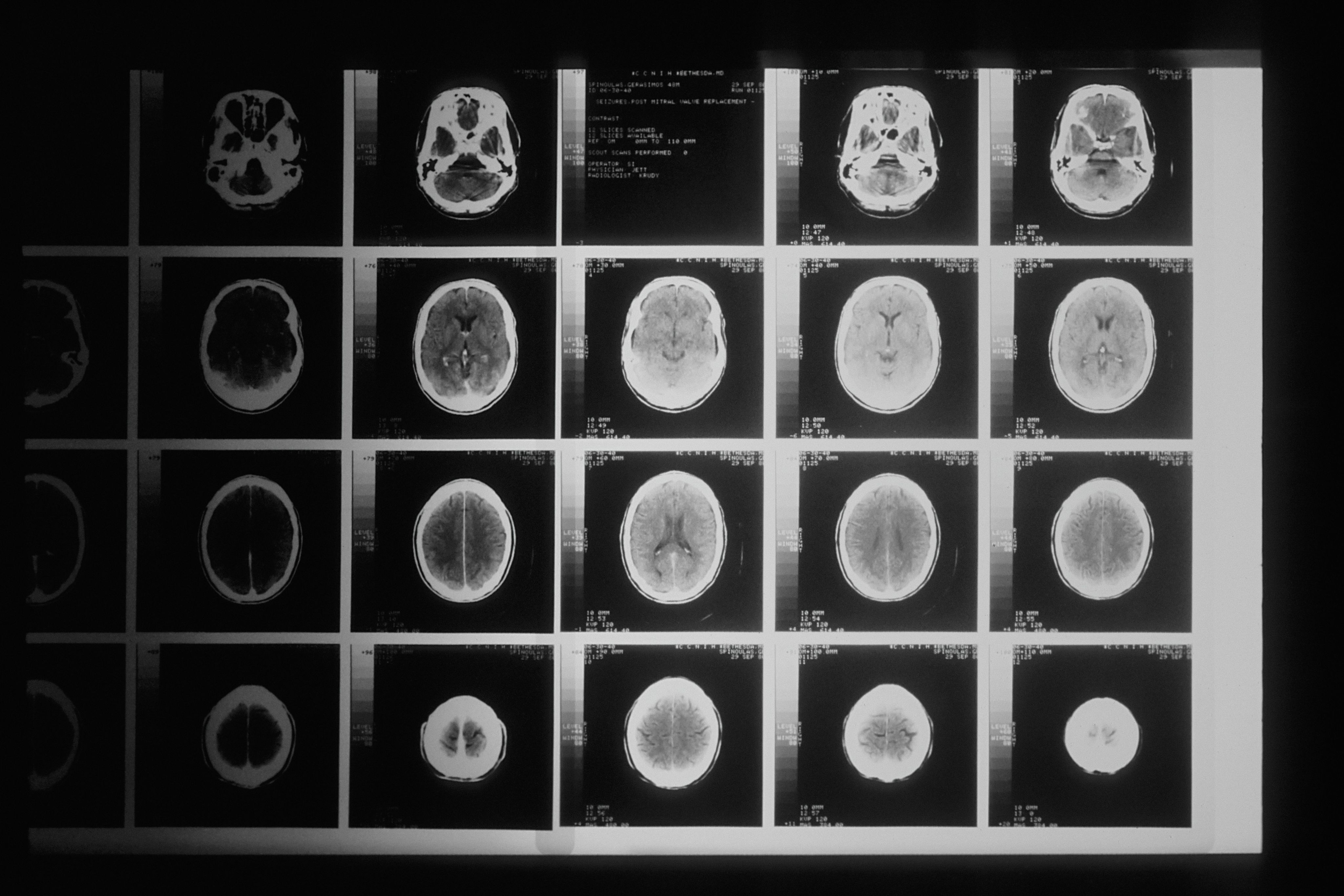

Andrea Jackson is sitting on her couch when it begins. One moment, everything is fine. Then her body stiffens, her hands begin to shake, and her awareness fades.
Her husband rushes to her side, grabbing the magnet that activates the device implanted in her chest, trying to stop something they cannot control.
Fainting and epileptic seizures can look the same to an outsider, but for those who live with uncertainty, the difference can mean everything.
I know the fear firsthand—the dizzy spells, the sudden loss of control, the way my family stared, unsure whether to panic or offer help. My mom saw it too—watching me, unsure if I was lightheaded or if something more dangerous was at play, as if everything went in slow motion.
Jackson knows it differently. Her seizures don’t give warnings; they take over, and she blacks out. Leaving her husband rushing to activate the device in her chest, meant to stop her seizures. And then there’s McKenzie Jackson, who has watched her mother’s body betray her more times than she can count. Watching her hands shake to no avail and play with her tongue.
For all of us, the dangers of the unknown are real. Whether it’s the unpredictability of fainting or the terrifying grip of epilepsy, the line between the two is thinner than most realize. And when it happens, the question isn’t just “What’s wrong?”—it’s “Will anyone know what to do?”
Living in the Grey Area
Fainting isn’t just an inconvenience—it’s unpredictable, frustrating, and sometimes terrifying.
I’ve felt the world slip away too many times to count, never knowing if it was a simple dizzy spell or something more serious. Doctors have given me many hypotheses, but nothing was ever certain. The fear of the unknown lingers with every unsteady step.


"Not knowing when it is going to happen, it just puts you in a constant fear. Even with preparations made it could still sneak up on you."
Rayah Obezo
My experience with fainting spells remains undiagnosed.
Fainting, also known as syncope, can stem from various causes, ranging from low blood pressure to neurological disorders. The difficulty in distinguishing fainting from seizures often leads to misdiagnosis.
According to the Mayo Clinic, syncope is commonly mistaken for epilepsy in 20% to 30% of cases. The lack of a clear diagnosis makes it challenging to manage daily life.
Living in this medical limbo means constantly balancing fear with hope. I have adapted my life to the uncertainty that is a daily reality for me, being on the line of grey.
“It’s not just about being careful. It’s about constantly being aware of what might happen and having a plan. Taking precautions no matter how long it has been since the last episode,” I said.
Beyond the practical concerns, I also struggle with the emotional toll of this reality.
“I never really relax,” I admit. “Even when everything seems fine, there’s always that thought in the back of your mind that something could happen. Like, did I eat enough? Did I drink enough?”
Like me, Jackson also lives with the weight of the unknown when her seizures take her under darkness, but we are learning to move forward despite it.


When Epilepsy Takes Over
For Jackson, there’s no mistaking what’s happening when a seizure hits
The sudden jerking, the loss of awareness—it’s not a question of if it will happen, but when. She has learned to live with the condition, but that doesn’t mean it gets easier. Her husband is always on alert, vagus nerve stimulation (VNS) magnet in hand, ready to fight back against something entirely out of their control.


"I just live. If I had a fear of not knowing when it was going to happen, and let that rule me or be a part of my life then I would not ever get out of bed. So I just go on with life."
Andrea Jackson
Jackson has been living with epilepsy for more than 15 years.
“So I go from this point to this point in time, or however long the seizure is, and even a little bit after that. After I might be like, did I just have a seizure? And I'll ask that, you know,” she said.
Her seizures affect her ability to work, drive, and even perform daily tasks without constant fear. She cannot drive or cook or even be left alone, for fear her condition will sneak up on her and she doesn’t know it.
According to the Epilepsy Foundation, approximately 3.4 million people in the U.S. live with epilepsy, and about one-third experience uncontrolled seizures despite treatment.


Understanding the VNS Device
Jackson’s treatment includes a vagus nerve stimulation (VNS) device, a small implant placed in the chest and connected to the vagus nerve in the neck. The device sends regular electrical signals to the brain to help reduce seizure frequency and intensity.
When a seizure begins, a magnet can be used to manually activate the device, delivering an extra pulse that may shorten or stop the episode. While the VNS does not cure epilepsy, it provides an added layer of control in a condition defined by unpredictability.
Jackson's husband, Darrien, has been trained to use a VNS device, which is implanted in her chest to help stop seizures. Jackson also has a responsive neurostimulation (RNS) device, which monitors her brain activity and requires her to upload data.
“Every night, I have a thing that I hold to my head that's attached to a computer," Jackson explained. “and I'm pretty much kind of downloading my brain every night.”


Living with epilepsy means Jackson experiences unpredictable episodes that disrupt her daily life.
She describes the frustration of not having control over when seizures strike, making it difficult to plan her days.
“Like going for a walk around the neighborhood, no, unless somebody's with me. I cannot drive, and so I do not go to the store. I can’t just go to Walmart. Nope, got to have somebody drive me. Going to any kind of doctor appointment or anything like that, nope. So there isn't any kind of independence whatsoever,” she said.
Despite these challenges, Jackson finds comfort in knowing that she has a family that understands what to do. And they know how to deal with living this dangerous cat and mouse game with darkness.


Growing Up with Uncertainty
McKenzie has spent her life watching her mom go through seizure after seizure.
She’s learned the signs, the steps to help, and the constant anxiety that comes with knowing another one is inevitable. For her, epilepsy isn’t just her mom’s struggle—it has shaped her entire world.


"Have empathy. Always. Put yourself in their shoes. Think about all the things you couldn't do if you were them. It's easy to get frustrated. But for them, the best thing to do is just have empathy and be patient. Know that they don't want to ask you all these things. It's because they have to."
McKenzie Jackson
As a child, McKenzie learned emergency procedures that most kids her age never had to think about.
“I feel like they [my parents] never really explained seizures. And sometimes I just learned more about them, just be like, oh, this is interesting,” she said. “But I've never felt like I had to get taught because it's just always been present.”
Now a student at Grand Canyon University in Arizona, McKenzie is learning to navigate life from a distance while carrying the same concerns.
“Yeah, I really can't really help her that much when I'm away you know,” she admitted.
The separation has been difficult, especially knowing that her mother’s seizures remain unpredictable. Although Jackson had been seizure-free for some time, it could always happen anytime.
“I just kind of try and support her in those ways of cheering on the victories, and I'll be there if something does happen,” she said.
Despite being hundreds of miles apart, McKenzie stays in close contact with her mother, texting and calling regularly. While staying connected offers some reassurance, the worry never fully disappears.
“I'll always be more aware with my mom, like it could always happen. She’s had, you know, plenty of times where it's been like, okay, it's been months. But it can start again,” she states.


A Mother’s Worry
Watching your child collapse without warning is a helpless kind of fear.
Erica Camacho, my mother, has spent years trying to piece together the puzzle—was it just low blood sugar, dehydration, or something bigger? Every fall, every hospital visit, and every unanswered question only adds to the worry.


"Always have your phone charged. That way, you can make phone calls to 911. Make sure that you get CPR, first aid training. Get some literature about fainting and epilepsy. Read all you can, and knowledge is power."
Erica Camacho
As a mother, Camacho has spent years watching over her daughter, uncertain of what each day would bring.
“Because all I wanted to do was help you, and there was nothing that I could do,” she said.
Camacho's worry extends beyond the seizures themselves but her emotions, too.
“How did I feel when it first happened? Very, very scared, but tried to keep my composure to make you [my daughter] feel a little better about the situation even though it was really scary,” she stated.
The emotional toll on caregivers of individuals with seizure disorders is significant. A 2023 study from Johns Hopkins University found that caregivers of people with epilepsy experience higher levels of stress, anxiety, and depression compared to the general population.
Camacho understands this firsthand; even if her daughter isn’t diagnosed with epilepsy but with syncope, it is the same in symptoms and uncertainty.
Even though her daughter has gone years without a major episode, Camacho admits, “Of course, I always worry about you. I'm your mom. Fainting or not fainting, I'm always worried about you. But with the fainting, I'm extra worried about you, especially when you're by yourself.”
Through the years, Camacho has dedicated herself to being understanding, fainting aside, and determined to support her daughter in every way possible.
“I think that’s why I check in with you almost daily. Just to make sure you're okay. But, unfortunately, I can't be by your side every minute of the day or else that's where I would be. But you have to grow up and live your own life too, so I don't want you sick of me. So, I know I have to kind of pull the reins back a little bit so you can live your life. But even if just sending one text a day is okay, that's okay with me,” she said.


Moving Forward in Uncertainty
For those of us who live with epilepsy, fainting spells, or the fear of the unknown, life is a constant balancing act. Whether it’s my unexplained fainting, Jackson’s seizures, McKenzie’s lifelong worry, or Camacho's forever uneasiness; uncertainty shapes our days. Yet, in that uncertainty, we find resilience.
Despite the fear, we learn to adapt. Despite the unpredictability, we build support systems. And despite the unknown, we keep moving forward—one day at a time.


 Built with Shorthand